
How to plan a successful outdoor event in 2026

Contents
The best outdoor events usually feel effortless for guests. That tends to come from careful planning and a venue that can support the day properly.
For organisers planning a summer party, Regent’s Events offers a central London setting that suits a wide range of event formats. The key is making sure the venue, layout and infrastructure support the kind of day you want to create.
Choosing the right outdoor event venue
When picturing the ideal outdoor venue, people often think of aesthetics first. That matters, of course, but it is only part of the decision.
A venue also needs to work well on a practical level. Guests need to arrive easily, move around comfortably and feel looked after throughout the event. That means thinking about access, facilities, service, catering, power and how the space will function across the day.
This is where the wider choice of event spaces becomes useful. A venue may look appealing in photographs, but the real question is whether it suits the pace, scale and tone of your event.
It also helps to have a clear idea about the purpose of the occasion from the start. A company celebration, a networking event and a team away day may all take place outdoors, but they each ask for something slightly different. The stronger the fit between venue and event, the easier the whole day tends to feel.
Planning for guest comfort outdoors
Comfort shapes people’s experience more than they often notice. If guests are too warm, standing too long, or hunting for facilities, the atmosphere can start to lose its ease.
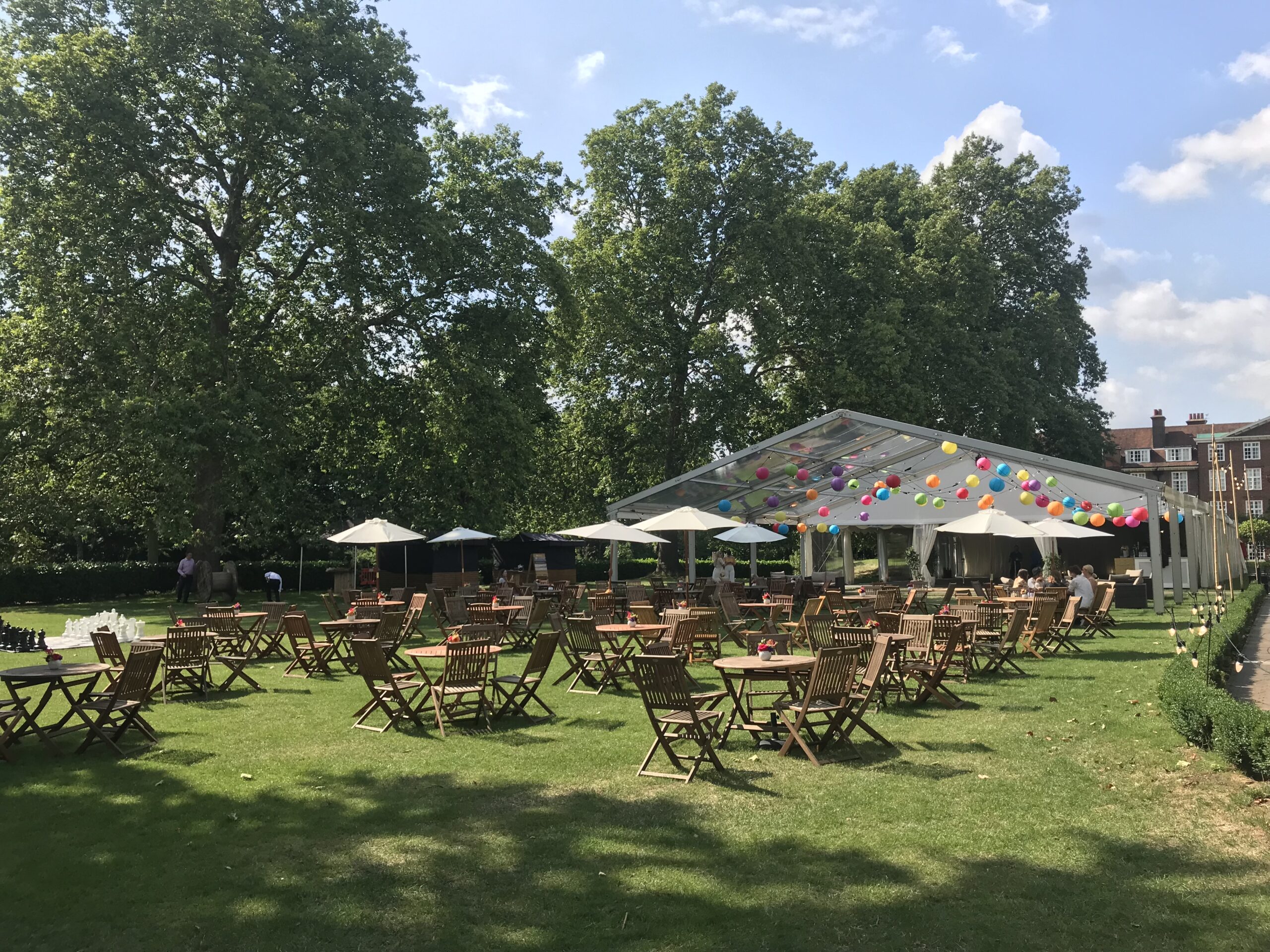
Shade should be considered early, especially for daytime events. Guests will usually appreciate a mix of open and sheltered areas so they can choose where they feel most comfortable as the day unfolds.
Seating needs the same amount of consideration. Even if the event is designed to feel relaxed and social, people still need places to pause, eat and talk. A layout with a mix of seating styles often works better than relying on one approach across the whole space.
Toilets may be one of the least glamorous parts of planning, though they are one of the most important. They need to be easy to reach, well signposted and appropriate for the size of the guest list. When those details are handled properly, guests tend not to think about them at all, which is usually the best outcome.
Weather backup plans that work
Anyone working out how to plan an outdoor event in the UK will already know that the weather needs attention from the beginning.
A backup plan should feel like part of the event planning, not something added nervously at the end. Covered areas, flexible furniture, access to indoor support spaces and a catering setup that can adapt all make a difference.
What matters most is continuity. If the weather shifts, the event should still feel coherent and well managed. Guests should not feel as though the original idea has disappeared the moment conditions change.
That is one reason venue choice carries so much weight. A space that gives organisers flexibility tends to make the whole planning process steadier.
Outdoor event layout and flow
A good layout helps an event feel natural from the moment people arrive. Guests should be able to work out where to go, where to get a drink, where to sit and where the focus of the event sits without too much direction.
Zoning can help with that. Separating arrivals, food, seating and activities into distinct areas often creates a better sense of movement and avoids the whole event feeling crowded into one point.
For organisers who want something more interactive, Regent’s Events also lends itself to formats shaped around team building or fitness and wellbeing. That can work well when the aim is to bring people together through shared activity as well as conversation.
Catering also affects flow. The style of service changes how people gather and move, so reviewing food and drink options early often helps the event feel more joined up.
Lighting, sound and power essentials
These details are easy to underestimate during early planning, yet they often shape how smooth the event feels on the day.
Lighting becomes more important as the afternoon turns to evening. Sound needs to support speeches or music without taking over the space. Power needs to be considered properly too, especially where catering, entertainment or production are involved.
When those practical elements are built in from the start, an outdoor event feels more settled, more comfortable and easier for guests to enjoy. That is usually what makes the difference between a nice idea and a successful event.
Final thoughts
A successful outdoor event is usually the result of good decisions made early. When the venue, layout and practical details are all working together, the day is far more likely to feel smooth and enjoyable for everyone there.
CONTENTS
 Sign up to our newsletter
Be the first to hear about exclusive offers, special announcements and more.
The latest from Regent’s

The psychology behind celebrations: why do we celebrate?
From a wedding or a birthday, to a summer party or a baby shower, we have always had many a reason...